Golconda Fort
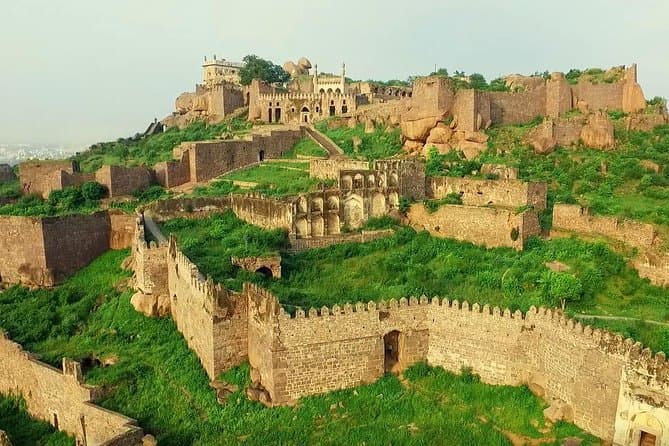
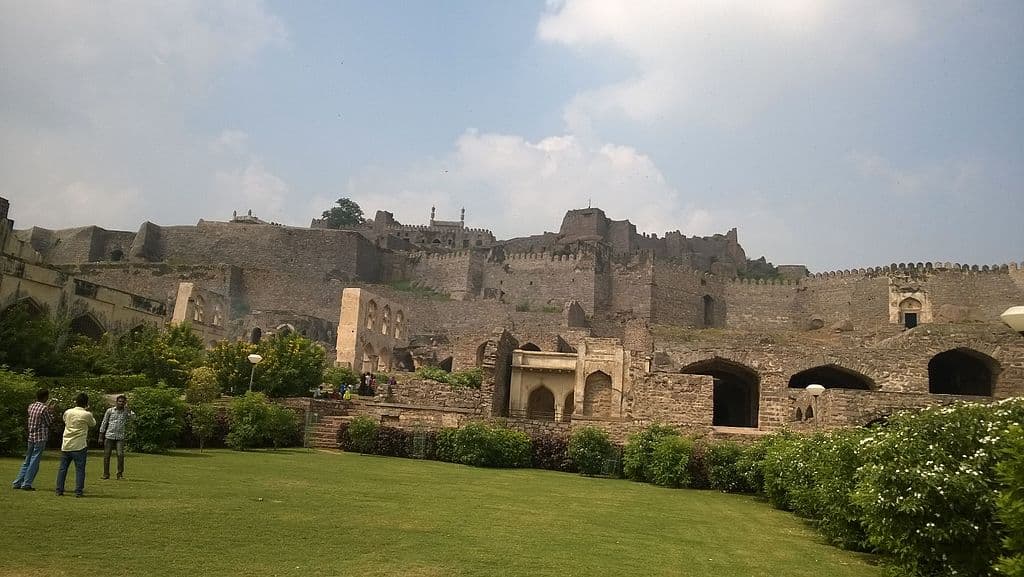
Golconda Fort is a magnificent historical monument located in Hyderabad. It was built in the 16th century by the Qutb Shahi dynasty, which ruled the region at the time. The fort was initially constructed as a mud fort, but it was later fortified with granite by the successive rulers of the Qutb Shahi dynasty.
The name "Golconda" is believed to have been derived from the Telugu words "Golla" and "Konda," which mean "shepherd's hill." This name is a reference to the hill on which the fort is built
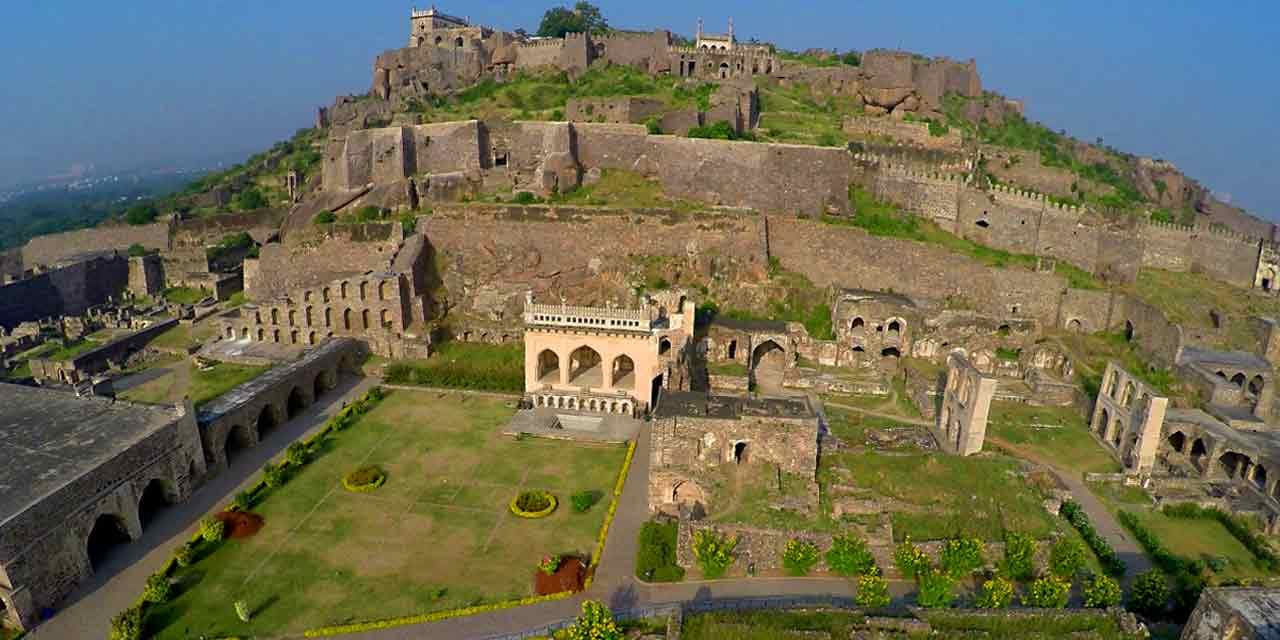
Golconda Fort was a significant center of trade and commerce during the Qutb Shahi dynasty. The fort was also known for its diamond mines, and the famous Koh-i-Noor diamond is said to have been found in one of these mines. The fort is spread over an area of 11 kilometers and consists of four distinct forts that are separated by a series of gateways, walls, and bastions. The fortifications were built to protect the innermost fort, which was the residence of the royal family and their close associates.
The fort has several impressive features, including its acoustics. The sound of a hand clap at the entrance of the fort can be heard over a kilometer away, which was used as a signaling system during wartime. The fort also has several underground passages that were used by the royals to escape in case of an attack.
One of the main attractions of the fort is its famous light and sound show, which is held every evening. The show narrates the history of the fort, and visitors can experience the grandeur and beauty of the monument in a unique way.
Today, Golconda Fort is a popular tourist destination and an important part of Hyderabad's history and culture. The fort has undergone several renovations and restorations over the years, and it is now a well-preserved monument that showcases the architectural brilliance of the Qutb Shahi dynasty.
In conclusion, Golconda Fort is a fascinating monument that offers a glimpse into the rich history and culture of Hyderabad. Its impressive architecture, underground passages, and acoustics make it a unique attraction that is a must-visit for anyone traveling to the city.
History of Golconda Fort
The Qutb Shahi dynasty ruled the region from 1518 to 1687 and made Golconda Fort their capital. The fort was a center of trade and commerce, and it was known for its diamond mines. The Koh-i-Noor diamond is said to have been found in one of these mines.
During the Qutb Shahi dynasty, Golconda Fort was known for its advanced architecture and engineering. The fort was built on a granite hill that rises 120 meters above the surrounding plains, and it was fortified with walls, bastions, and gateways.
The fort consists of four distinct forts that are separated by a series of walls and gateways. The outermost fort was used for defense and had a series of gateways that were designed to trap invading armies. The second fort was used to store weapons and ammunition, and the third fort was used as a residence for the royal family and their close associates. The innermost fort was the highest and most secure, and it was the residence of the ruler and his family. The fort was also known for its unique acoustics. The sound of a hand clap at the entrance of the fort can be heard over a kilometer away, which was used as a signaling system during wartime.
In 1687, the Mughal emperor Aurangzeb captured Golconda Fort and brought an end to the Qutb Shahi dynasty. The fort lost its importance and was abandoned for several centuries. In the 19th century, the British government took over the fort and used it as a military garrison. The fort was then restored and converted into a tourist attraction in the 1950s.
Kings of Golconda Fort
- Kakatiya Dynasty (12th-14th century): The fort was initially built as a mud fort by the Kakatiya dynasty in the 12th century. The Kakatiya dynasty ruled the region until the 14th century when they were conquered by the Delhi Sultanate.
- Bahmani Sultanate (14th-16th century): The Bahmani Sultanate was established in 1347 and ruled over the Deccan region, including Golconda Fort. The Bahmani Sultanate was succeeded by the five Deccan sultanates, one of which was the Qutb Shahi dynasty.
- Qutb Shahi Dynasty (16th-17th century): The Qutb Shahi dynasty was founded in 1518 by Sultan Quli Qutb Shah, who was a governor under the Bahmani Sultanate. The Qutb Shahi dynasty ruled the region for almost 170 years and made Golconda Fort their capital. They expanded and fortified the fort, adding several structures and features.
- Mughal Empire (17th-18th century): In 1687, the Mughal emperor Aurangzeb captured Golconda Fort and brought an end to the Qutb Shahi dynasty. The Mughal Empire ruled over the region until the decline of their empire in the 18th century.
- Asaf Jahi Dynasty (18th-20th century): The Asaf Jahi dynasty was founded by Nizam-ul-Mulk Asaf Jah, who was appointed as the governor of the Deccan region by the Mughal Empire. The Asaf Jahi dynasty ruled over Hyderabad and the surrounding regions for almost two centuries, during which they made several additions to Golconda Fort.